
Five Breaths to Reboot Your Workday Focus
Why Five Breaths Work When Minutes Feel Impossible
Stress, the Vagus Nerve, and a One-Minute Reset
Acute stress tightens breath patterns and narrows thinking. Gentle, patterned breathing sends a signal through the vagus nerve that your body can release unnecessary tension. In a minute, heartbeats spread slightly apart, shoulders drop, and vision feels less tunnelled. That physiological message frees cognitive bandwidth. Instead of wrestling your mind into focus, you clear the physiological interference and let attention settle naturally. This is not escapism; it is preparation to meet the next task with steadier hands.
The Power of Longer Exhales for Cognitive Control
Extending your exhale even modestly stimulates calm without fully depressing drive. This balance matters at work, where you want clarity and momentum, not drowsiness. When exhales slightly exceed inhales, neural circuits involved in top-down control gain a tiny advantage, helping you reduce rumination and re-engage a chosen target. The effect compounds when repeated throughout a day, creating a rhythm where recovery and productive intensity alternate smoothly. Five breaths are small, but repeated small levers move heavy loads.
Evidence, Anecdotes, and Practical Safety
Studies on paced breathing and physiological sighing suggest quick reductions in state anxiety and measurable improvements in mood. Beyond research, countless workers report fewer impulsive clicks and easier re-entry into challenging documents after a short protocol. Always stay comfortable, avoid forcing holds, and breathe through the nose when possible. If dizziness appears, pause and return to normal breathing. These practices are supportive skills, not diagnoses or cures, yet they reliably tilt conditions toward steadier attention and kinder self-management.
Setup and Posture
Five-Breath Flow
Box Micro-Cycle in Five Breaths
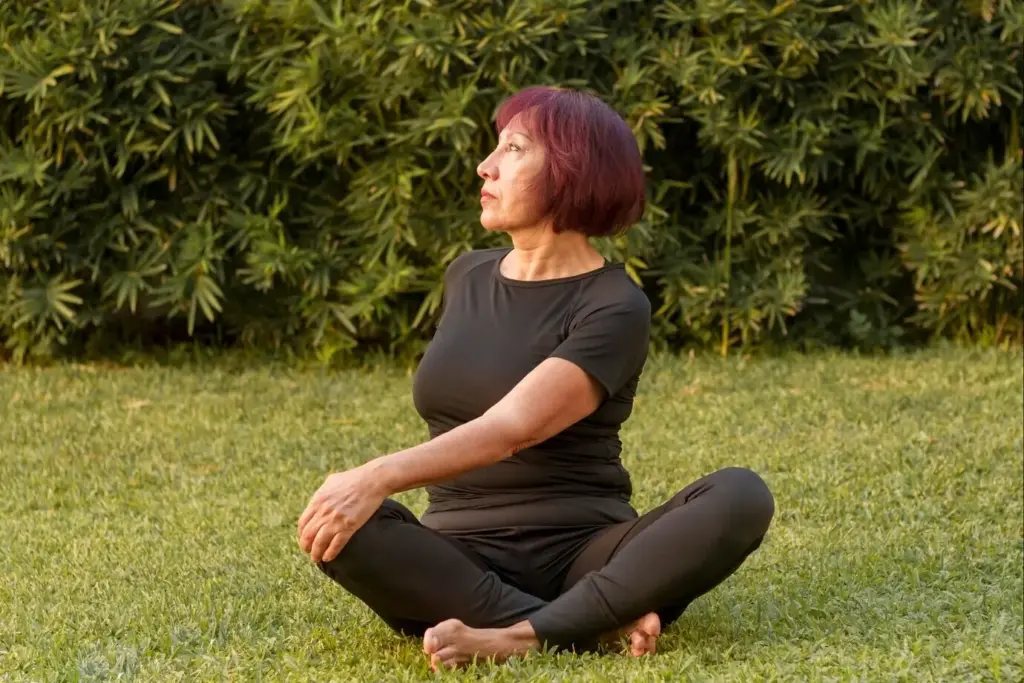

Elongated Exhale Sweep in Five Breaths
Nasal Focus Breath with Visual Narrowing
Pairing Breath and Gaze for Precision
Vision and arousal are linked. Narrowing your gaze signals readiness and selection, while softening peripheral light reduces distractions. Nasal breathing keeps airflow smooth and encourages better pacing. Together, they become a practical stance for exacting work: code review, contract language, data verification. Apply only briefly to avoid tunnel vision. The aim is precise engagement, not rigidity. Like a camera, you can zoom and unzoom, training a flexible focus that serves the real, evolving demands of your day.
Five-Breath Drill
Sit tall, align your screen, and choose a single line of text or a small on-screen region. For five breaths, inhale sharply yet comfortably through the nose for about three counts, exhale for four to five softly, keeping eyes on the exact target. Let peripheral clutter blur. On the fifth exhale, highlight the chosen line and complete one micro-action—fix a sentence, approve a cell, rename a variable. Then widen your gaze deliberately, bring the breath to neutral, and continue calmly.
Balancing Left-Right Arousal Gently

Five-Breath Alternation

Care, Comfort, and Consistency
All Rights Reserved.